


We weren't looking for El Portón. We were heading to Chochis, two hours south on the highway from San José de Chiquitos, planning to photograph the sandstone formations that dominate the valley there. The morning was bright and unhurried — the kind of Chiquitania light that flattens the scrubland and sharpens everything vertical.
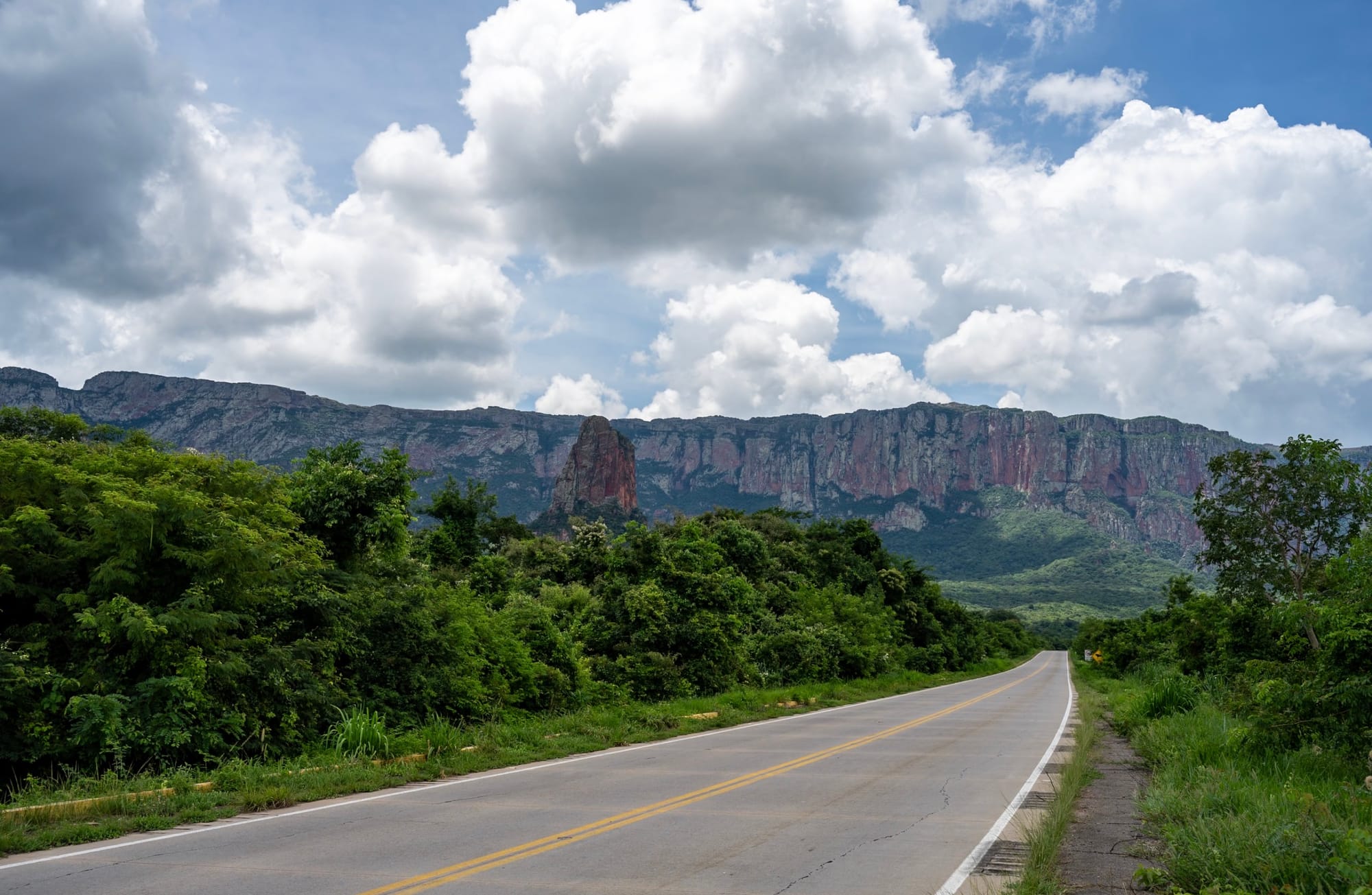
Not long before reaching Chochis, a small roadside sign pointed toward a place called El Portón. No description, no distance. Just a name and an arrow pointing up a side road.
Curiosity won.
We turned off the highway and began climbing a narrow dirt road that quickly deteriorated into something not far removed from the road to Piso Firme at its worst — rocky, winding, and slow going, though thankfully without the water pits that had plagued us in the north. After about half an hour the road delivered us into a small clearing beneath towering sandstone cliffs.
There we met Enrique.
Barefoot and wearing shorts, he stepped out of an old building and introduced himself as if he had been expecting visitors all along.
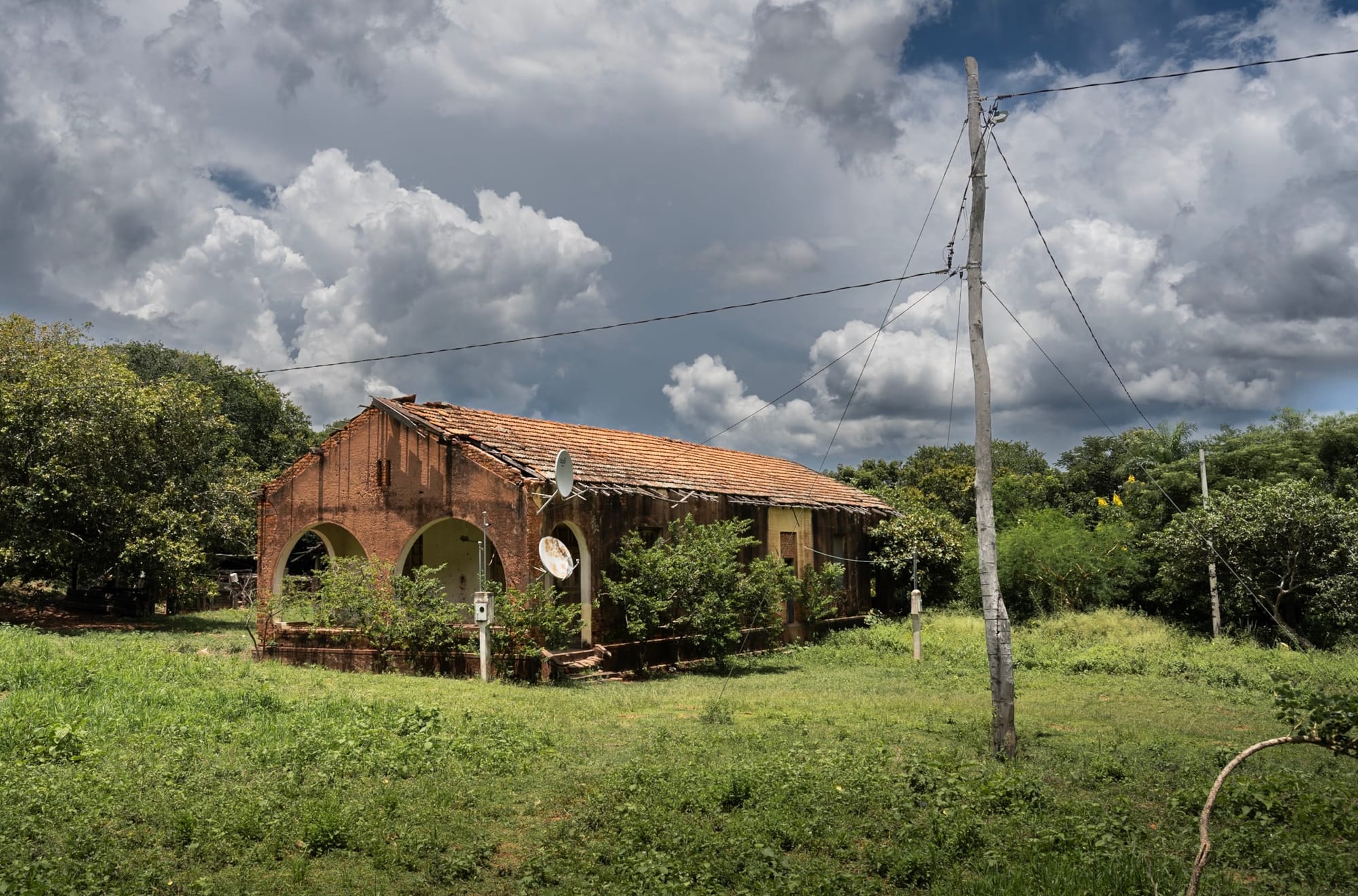
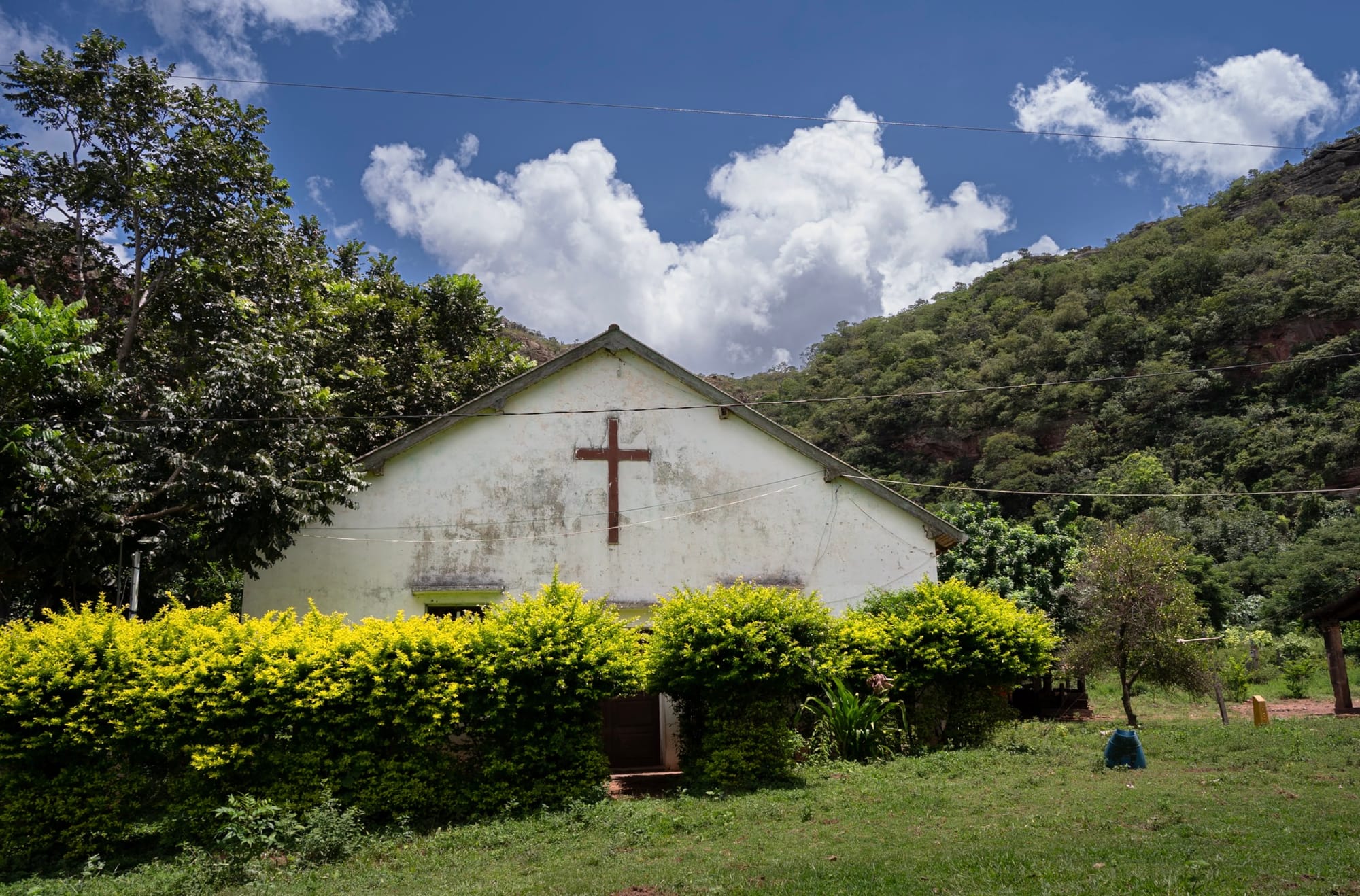
Portón exists because of the railway. In the 1940s, as part of a national project to connect Bolivia's eastern lowlands to Brazil, work crews — many of them Brazilian — began blasting through the sandstone cliffs of the Chiquitania to lay track. It took a decade to dynamite through two solid rock faces to make the passage. A settlement grew up around the construction camp and the station that followed: houses, a church, a schoolhouse, a small community defined by the rail line that ran through its center.
Then, on the night of January 18, 1979, the cliffs that had taken ten years to open gave way in a matter of hours. After weeks of relentless rain, the saturated sandstone fractured and collapsed, sending walls of rock, mud, and water through the settlement. Seventeen people died — men, women, and children. The survivors, many of them attending a wedding celebration that evening, escaped with nothing but the clothes they were wearing. An Ayoreo man named Cirilo Méndez walked to the nearest town to raise the alarm. Helicopters from Bolivia and Brazil eventually evacuated the survivors.
Most families never returned. Portón became, for decades, a near-ghost town — the old station and the church standing among the cliffs like monuments to a place that had almost ceased to exist.
But not entirely. In recent years, the sons and daughters of those original families have begun coming back. The settlement is now a Tierra Comunitaria de Origen, led by a cacique and organized around a small group of families determined to keep the place alive. A school has reopened. There is talk of developing the area for rock climbing and adventure tourism, using the same dramatic cliff faces that once nearly destroyed the community.
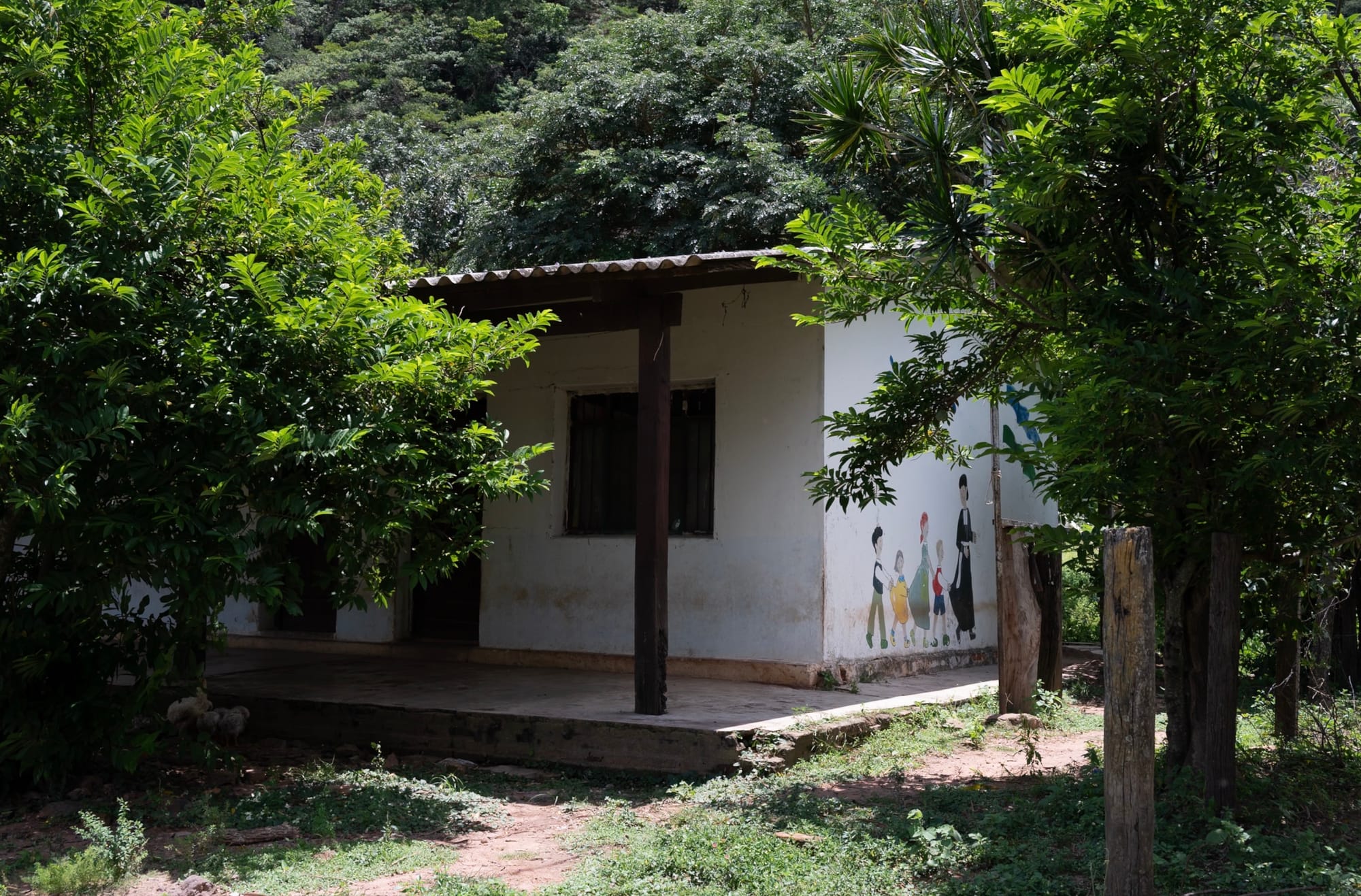
Enrique showed us what remained and what was returning. The old station still stood, along with the church, the schoolhouse, and a few scattered buildings slowly surrendering to time. A single rail line cut through the property. In a nearby pasture a horse grazed alongside a handful of sheep and goats. The buildings were quiet and the air was still. All of it was surrounded by dramatic cliffs rising almost vertically above the village, their sheer faces giving the place a feeling of quiet protection — though you understand now that protection is not quite the right word.
With his permission I photographed the buildings and the landscape while he talked. He spoke without nostalgia or complaint, the way people do when they've made their peace with where they are.
At the end of our visit he disappeared briefly into the old station and returned carrying a handful of fruit, which he shared with us before we left.
We thanked him, promised to return someday, and started back down the same rough road toward the highway. From a viewpoint above the settlement — a twenty-minute climb to a plateau — the Chiquitano dry forest stretches unbroken to the horizon. The article's headline in Soy Bolivia was right: this is a town that is close to the sky.
Soon afterward we reached Chochis, instantly recognizable by its towering sandstone monument — the Torre de Chochis — rising above the village like a natural cathedral. The formation dominates the valley from every angle, and the late afternoon light carved deep shadows into its western face as we arrived.
After checking into a small hotel we drove out to explore the surrounding area — the warm springs at Aguas Calientes, the quiet streets of Roboré — before returning to Chochis for dinner at a small place along one of the town's dirt roads.
The Chiquitania doesn't announce itself the way the rivers of Noel Kempff do, or the salt flats of Uyuni. It reveals itself in detours — a sign you almost drove past, a man who steps out of a building you weren't planning to visit, a handful of fruit offered without being asked. The landscapes here are dramatic enough, but what stays with you are the encounters — and the knowledge that some of these places are being held together, quietly, by the people who refused to let them disappear.


