


This article is the first of two posts; the second is The Birder in Sopocachi.
Every return to Bolivia starts the same way: a very early alarm, a long day of airports, and a phone that starts buzzing the moment it finds a signal. This one was no different, except that within two days I had a memorial to attend, a plan to rethink, and a (seemingly) mountain of documentation to complete.
Wheels up
I was up at two-thirty on the morning of Friday, October 2, for the last of the packing. At National Airport the bag drop was still closed. Minutes after it opened at four, I was through security. In Houston I found a quiet spot at gate D10, with a wide view of the airfield and almost nobody around, which at that hour felt like a small gift.
The flight south had Starlink. Somewhere over the Gulf, an email arrived from the natural history museum in Santa Cruz with the carta de intención, the museum's letter of intent, signed. It's one of the key documents for this trip. A foreign researcher can't simply apply to work in a Bolivian protected area. A Bolivian scientific institution has to stand behind the project and say, in writing, that it will receive the data and support the work. This letter is that endorsement. Without it, the request for authorization doesn't move. Reading it at thirty-five thousand feet, I felt for the first time that the project had a home in the country.
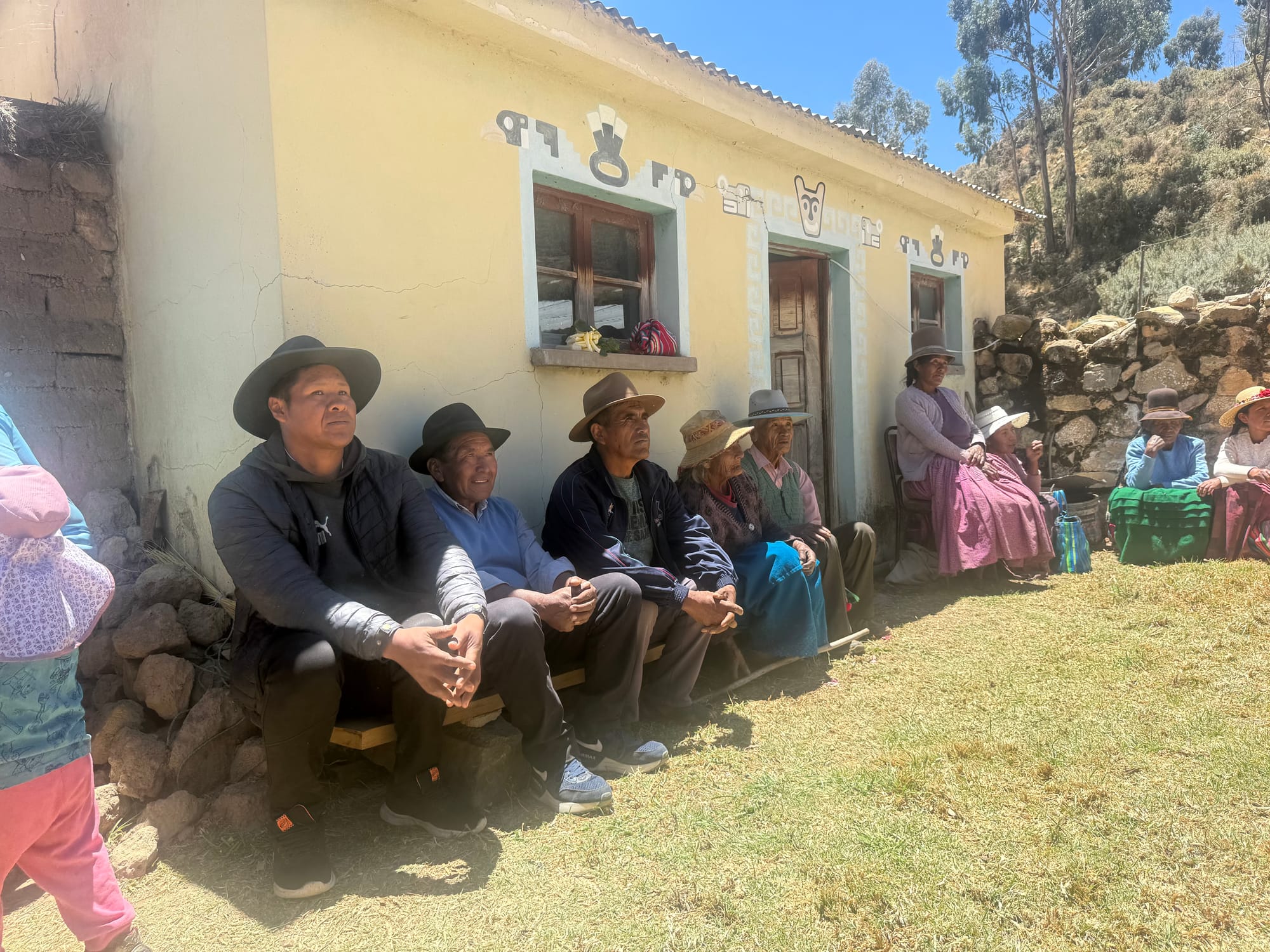
A memorial on the island
Before going back to the park, I had somewhere more important to be. I flew on to La Paz for a memorial for my friend Marcelo, an anthropologist who died this year. (He's not to be confused with Marcelo the park ranger, whom you've met in these pages; Bolivia is generous with its Marcelos.) He inspired me endlessly with his encyclopedic recall of the country's history, before the conquest and after it. Over coffee, he could walk you through five centuries without a note.
Together with two of our mutual friends, Jaime Chambi from Achiri and Esteban Quelima from Challa, we arranged a ceremony on the Isla del Sol so that his daughter, Valentina, could leave his ashes on the island, as he had wished. All four of us are anthropologists, which may explain why the planning involved so much talking. Members of the island community led the ceremonies, and afterward everyone sat down to lunch together.
Coffee, and a message
The Saturday after I arrived, I sat in my apartment in Santa Cruz with a cup of coffee, then another, and began sending WhatsApp messages to everyone connected to the project around the country. Most were short: I'm here. Some included my dates in La Paz and on the island, in the hope of a cafecito. In between, I sorted out the small errands that come with every trip, like handing friends the things they'd asked me to bring from the States.
One reply stopped me.
Hay un tema. There's an issue.
It came from a friend whose land borders the park, someone who knows what happens on the ground there better than almost anyone. The southern entry I had planned on, where the river runs low enough at this time of year to cross in a vehicle, was not a good place for an outsider right now. I had planned for risk; that's part of working in remote places. But this was the exact spot I'd built the trip around.
My phone rang a minute later. He wasn't trying to talk me out of anything. He wanted to make sure I understood the situation as it looks from the ground, not from a map. It was a short, generous call, and by the end of it I was in Plan B territory: entering through Florida instead, crossing the river by boat with the motorcycles. I'm an experienced rider and would normally relish that. The logistics of getting people, cameras, and fuel across a river and down a long dirt road took the shine off it quickly.
A whole community
Later that day, Marcelo the ranger called from Florida. It was a long call. What he told me was encouraging and humbling at the same time.
He had just come back from meeting the park director, who was fully behind the project. And he was already gathering people. Not a crew he had to persuade, but neighbors who wanted to come. The cacique, the community's leader, told him, I'll go too, with you. Five comunarios were ready on their motorcycles and eight more in the vagoneta, all of them wanting to go and see the way in, and to clear the road if it needed clearing. And through all of it, he kept coming back to the same refrain, over and over: tu seguridad ante todo. Your safety above all, that's what matters most to me.
A whole community, it turned out, ready to carry this in on its own shoulders. I sat with that for a long time after we hung up.
Continued in The Birder in Sopocachi.


