


For most of this past year I've been walking toward one animal: the borochi, the maned wolf, the tall red canid of the South American savannas. This month I'm finally on the road to a remote corner of a national park in eastern Bolivia, to set camera traps with the park's guardaparques and Bolivian partners. No capture, no handling, just cameras and patience.
I thought I knew where this road led. Two days in, I'm not so sure.
Day 1: Santa Cruz to Trinidad
After a bowl of my mother-in-law's chicken soup, we finished loading the car and pulled out of the garage at exactly 1 PM. That was on time, at least by the clock we'd been running on all morning: a whirlwind of final packing, calls back and forth with everyone involved, and a two-hour meeting for my other job. First stop, the gas station, to top off the tank and fill two 20-liter jugs for the stretch where there won't be any fuel. At 2:02, from the corner of the second ring and Avenida Beni, we were officially on our way. The second official departure.
At 4:30, a parada técnica at the market in San Julián. With the technical part completed, I fished my iPad out of the back, connected to my computer at home, updated one of the tracks on our field map, and synced it to the tablets we'll carry in the park. Amazing what you can do in the middle of nowhere with a satellite signal. Thirty minutes later we were rolling again.
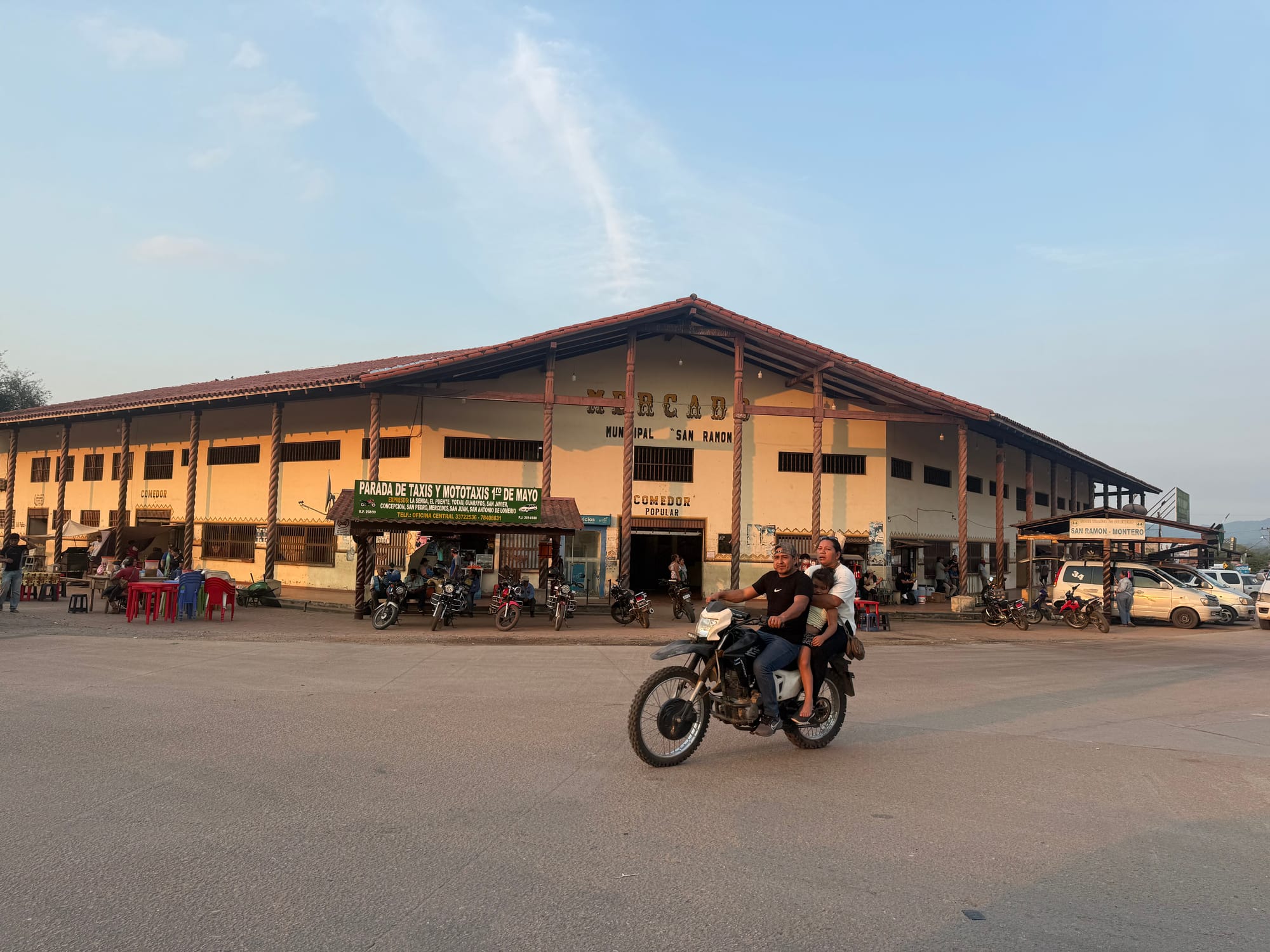
Past San Ramón we turned northwest toward Trinidad and drove into smoke from agricultural burning, the kind that's prohibited, the sun a bright orange orb hanging in the haze to our west. The highway was well paved. Scratch that. Dusk settled in, and dark, bottomless pits came flying at us out of the road. We missed most of them.
Fuel in Guarayos at 7:40, then long stretches of near-complete darkness, broken only by the headlights and the occasional oncoming truck. An hour or so out of Trinidad my eyes couldn't hold focus any longer, and I handed the wheel back to Mayko, our documentarian, who had already driven half the day. We arrived at almost exactly midnight, at the apartment of my wife's nephew, Sebastian, a flight instructor here. The bed was up in a loft above the sofa, comfortable as hell after ten hours on the road. The AC was on and I was too tired to work out how to turn it off, so I piled pillows on myself and shivered through the night.
In the morning, I noticed a stack of blankets on the shelf next to the bed.
A note on the tools
For photographers heading somewhere remote, here's one thing that's helped. Each morning, an AI assistant, Claude, checks the forecasts for the last stretch of dirt road and keeps a running log of what the guardaparques and the drivers coming through report, with simple thresholds for when a two-wheel-drive car should wait a day. It doesn't replace asking the people on the ground. It makes sure I ask them the right questions at the right time. The forecasts set the questions; the people on the road answer them.
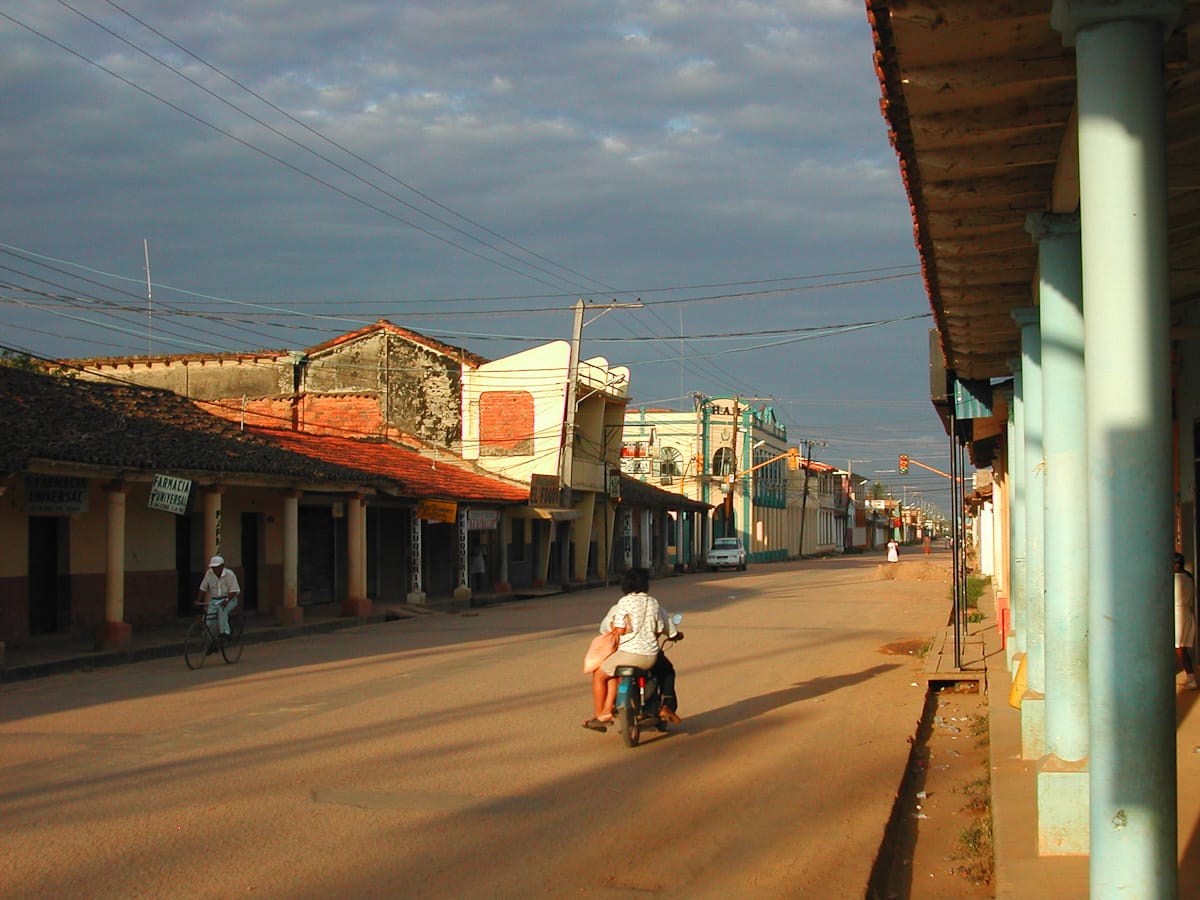
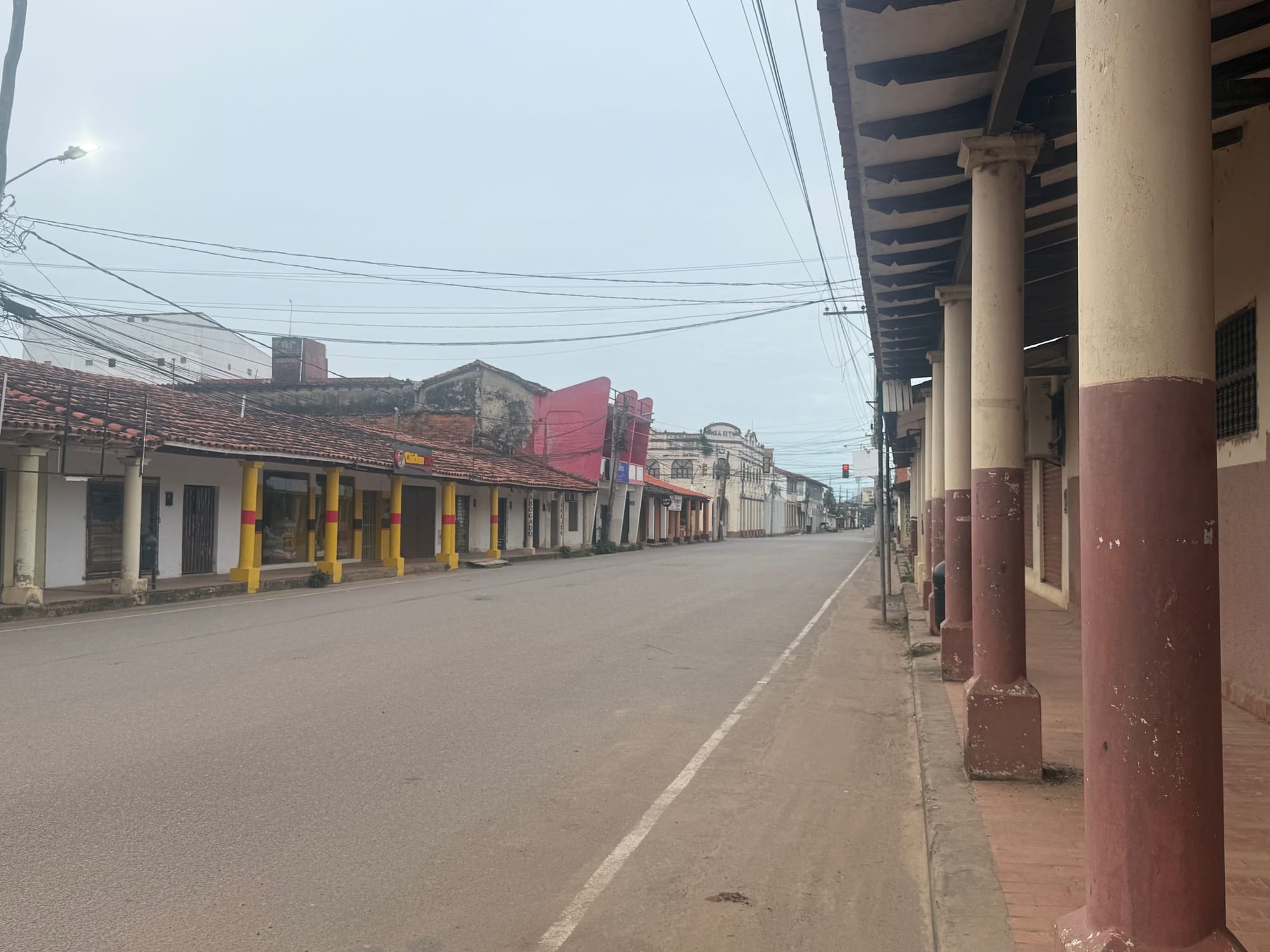
Trinidad 2001 and 2026
Day 2: Trinidad, 25 years on
Breakfast at the downtown market. It's still morning and already hot and humid, with 95°F in the forecast. I order coffee and masaco, which comes with what I assume is beef and a fried egg. In contrast to our midnight arrival, the streets now swarm with scooters, many of their riders holding umbrellas against the sun, darting here and there as the town lifts itself from sleep.
In a few weeks it will be 25 years since my first visit here. I dug out the handful of street photographs I made back then, and with Sebastian's help we found where some of them were taken.
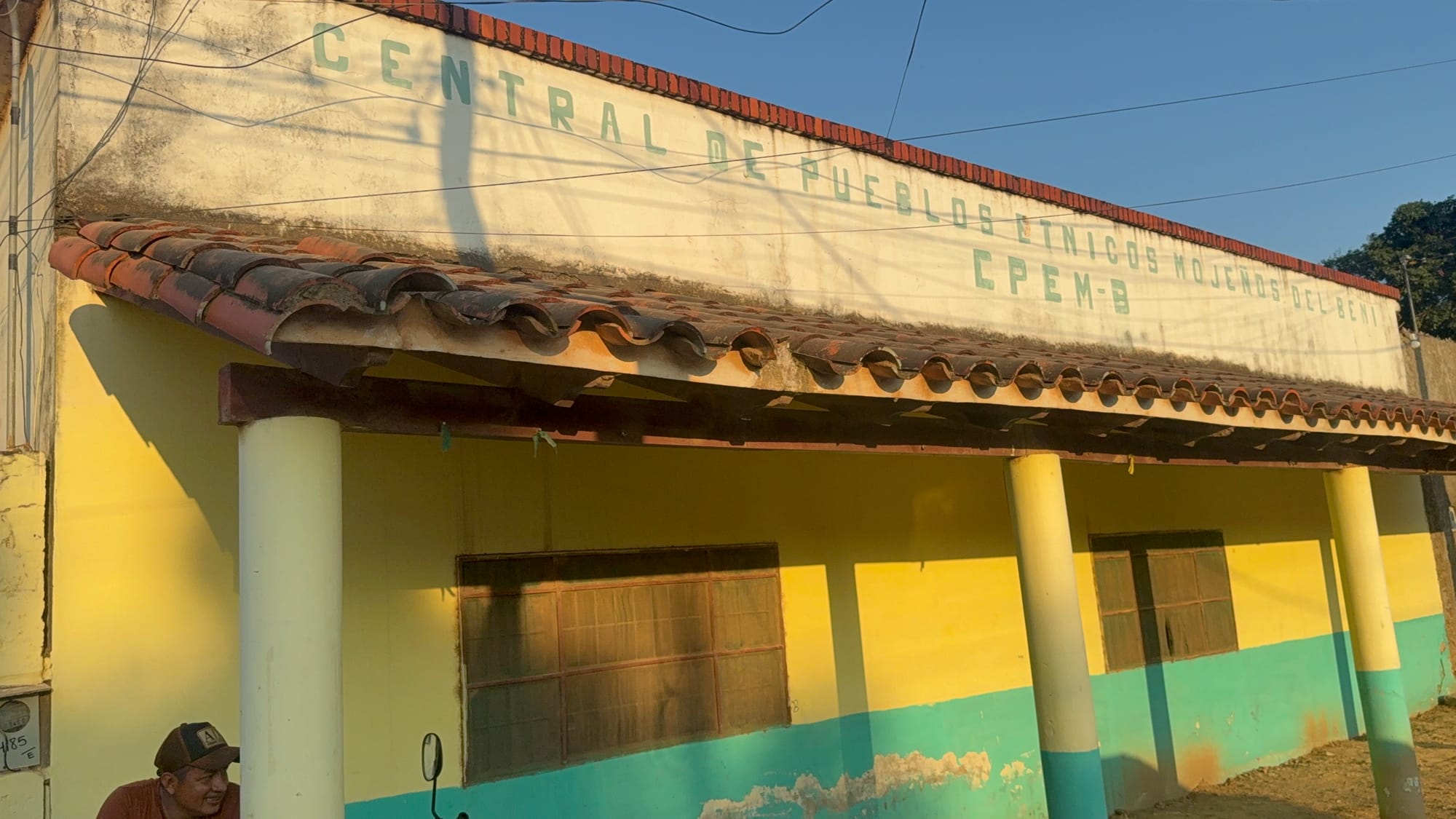
Lunch at the lakeside at nearby Laguna Suárez, where locals say a giant anaconda lives somewhere out in the water. Then a dash to the airport to borrow a projector for the afternoon's meeting with indigenous leaders. In the rush we realized my iPad speaks USB-C and the projector speaks HDMI. Mayko came back from the shop to report that an adapter cost 200 bolivianos, about twenty dollars. Too much, he said. A few minutes after we arrived, it was abundantly clear we needed it after all, and he and Tito ran off to buy one while I made conversation with the first arrivals. (I had also, of course, forgotten to bring an actual camera trap to pass around the room.)
The meeting: a door, not a destination
The room was sweltering. Many of the leaders sat with their backs to the window, and for much of the afternoon I could barely make out their faces against the sun streaming in behind them. It was a little surreal to stand before people who have given their lives to lifting their communities against odds that are not in their favor.
I warned them up front that I'm not a public speaker, and then proved it. I bounced around, my right brain ignoring my left brain's pleas to follow the script I'd prepared. It didn't make sense, though, to take a straight line through a subject so full of detours. Soon I was at the last slide, trying to sum up its title: investigar en un área protegida, escuchando a los pueblos, doing research in a protected area while listening to the people who live there. Twenty-five minutes of presenting had given that phrase a new meaning for me. I managed to say how much it meant to stand before them, and that I was shaken to discover what I was doing might mean something to the people in that room.
Then the floor opened, and one by one the leaders spoke. Some shared what the borochi has meant in their families for generations, stories I'll tell here once the people who told them have said I can. As the afternoon wound down, they spoke of something else: communities without proper wells, where water is carried home from a distance; communities without reliable electricity or health care. I tried to acknowledge what they were telling me, and said that my journey with the borochi had become a door into their communities, that in my heart this work is a path to them. At that point I almost lost it. I could hear my wife's favorite refrain from our movie nights, are you crying?, and I braced myself against it, collected my wits, and reminded them, a bit lamely, that as one person my resources are limited, but that I hope this work will draw attention to what their communities need.
Only that morning I'd thought the borochi was what I had been walking toward all year. With this turn, all I can do is follow my heart.
By the end of the meeting I also had a nickname. The president of the host organization couldn't quite get his head around Moretti, so he settled on Mr. Borochi. I set myself up for that one.
Afterward, out in the back yard and away from the heat of the room, over fresh chicha and empanadas, people told me what the borochi is called in their own languages. I heard okromo and tuyawa, and Mayko went from person to person asking them to say it for the camera. A few younger people, not yet senior enough to sit in the meeting, watched what was clearly their own rare sighting: a tall, white, mature (let's go with that) gringo, iPad and cable in one hand and a thin plastic cup of chicha in the other, chatting with the elders.
We left the adapter behind, of course.


