


Second of two posts; the first, Coming Back, covers the arrival and the memorial on the island.
October is the month all of this has been pointing toward. The reconnaissance in August was about the road. This month was supposed to be about the park: the cameras in, the savanna at last. Instead, so far, it has mostly been about paper, telephones, and coffee. That may be the most Bolivian sentence I've ever written, and I mean it fondly.
Because of the paper and the phones and the coffee, I've met people. And as usual on this project, the people turned out to be the story.
The only gringo in the plaza
I came down off the altiplano on a Wednesday, back into La Paz from a few days on the lake, checked into a hotel in the Zona Sur around two, and pointed a taxi up the hill toward Sopocachi. I had an afternoon coffee with a biologist from the national parks service. We'd been writing back and forth for weeks about my permit: polite, helpful messages, mostly about which office, which form, which bank account, and in what order. We had never met.
Neither of us quite knew what to expect. A permit applicant and the person processing the permit is not, on paper, the setup for a long afternoon. So I texted her that we should meet in the Plaza España and that she'd recognize me easily, as I'd be the only gringo in the plaza. That earned a smiley, which I took as a good sign.
She found me, of course. We walked to a café around the corner. She ordered a cappuccino. I ordered an Americano, and couldn't resist adding of course, which earned a smile. Then we sat down for what I'd planned as a short meeting. It lasted two hours.
Scientific names, without hesitation
The professional part came first, the way it should. She'd started with the parks service in March of this year. Before that she'd worked on projects in Madidi and the pampas to the south, floating between protected areas the way field biologists do. These days her desk is exactly the kind of thing I'm doing: research inside protected areas, and the paperwork that lets it happen.
Somewhere in the middle of that, the conversation turned to birds, and the afternoon changed.
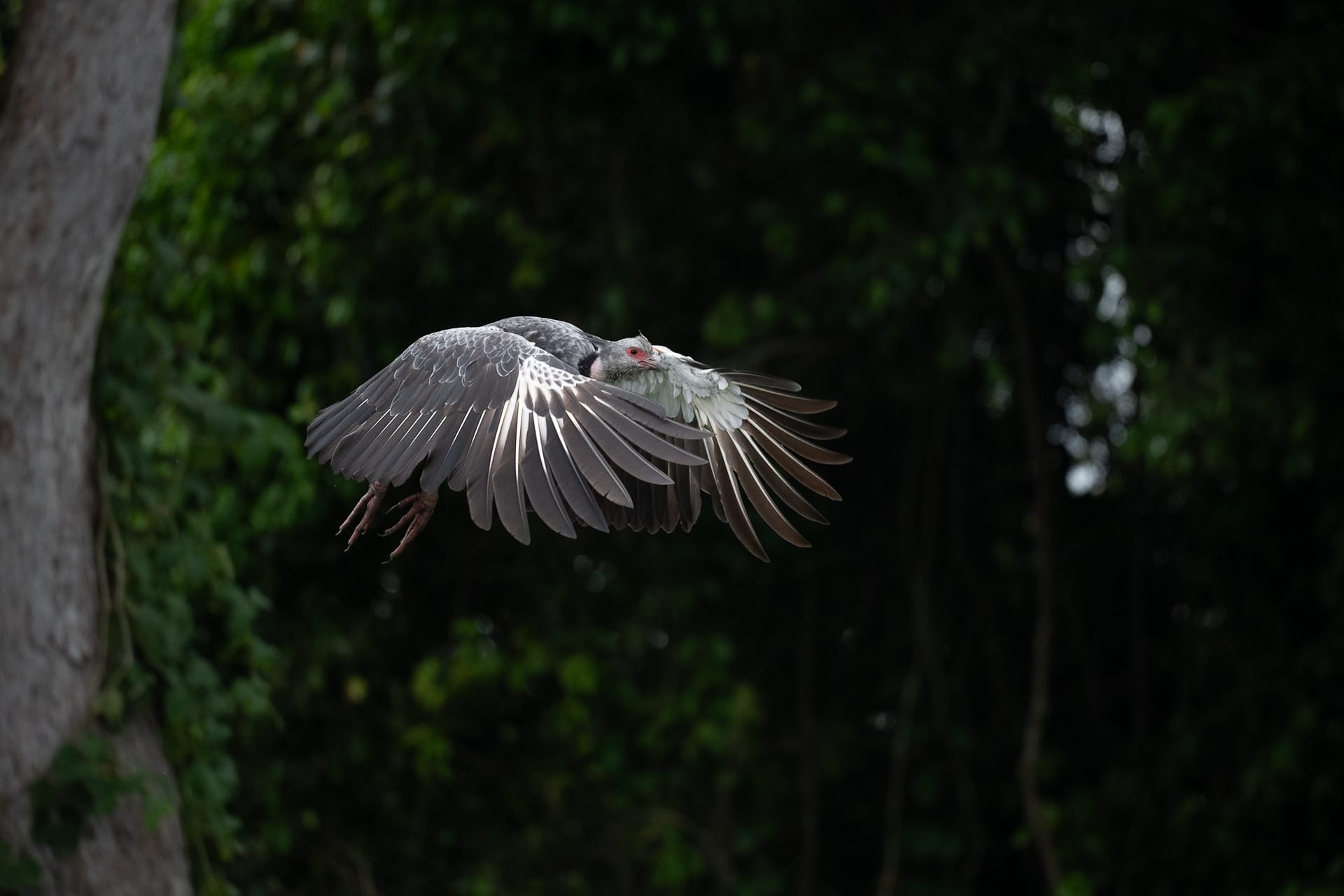
I had a few of my photographs from my February trip to the northern part of Noel Kempff on my phone, and I started showing her. She named every bird by its scientific name, without hesitating. Not "a kind of heron," not "let me think." Genus and species, one after another, like reading a list she'd memorized years ago. I've spent a lot of my life around people who know birds, and that particular fluency is rare. You can't fake it, and you can't cram for it.
She shoots birds herself, with a small Nikon compact, a Nikon Coolpix P900 she's clearly fond of and has pushed well past what it was designed for. She logs her sightings on eBird and iNaturalist. She asked whether I could help her find a bigger memory card. I checked later, and her camera tops out at 32 gigabytes, so the answer is a second card rather than a bigger one. She knows the north of Noel Kempff far better than the south, where I'm headed. When I mentioned that the next time I go north for birds I'd want to find her, her face lit up at the idea of coming along as the bird authority. I'm holding her to that.
She's a paceña, from La Paz. And she dances in the Oruro Carnaval, with the Tobas, one of the great lowland-inspired dances. I would not have guessed that from a permit correspondence, and it made me like her even more.
By the end of the two hours, what had started as a meeting between an applicant and a functionary had turned into something closer to a friendship. That has happened again and again on this project, and I've stopped being surprised by it. I've never stopped being grateful.
A different kind of chain
The professional half of the conversation turned out to matter more than I expected.
I told her why I'd pivoted. The original plan was to go into the southern park for photography, and the plan now is to try to pick up where the Smithsonian study of the maned wolves at Los Fierros left off. She recognized Louise Emmons's name immediately, and from that moment knew exactly what I was trying to do. What she didn't know were the details: six camera traps, set out across the savanna in the hope that a descendant of the animals in Emmons's monograph walks past one of them.
When I mentioned the cameras would be donated to the park when the work was done, she leaned in. Then, almost immediately, she solved a problem I've been turning over for months.
The plan had always been to install the cameras and come back to retrieve them, a single trip out at the end, tied to my being in the country. She suggested instead that the park rangers do it. They're experienced with camera traps. Most recently they used them to follow Yaguara, a young female jaguar orphaned as a cub in the 2024 fires. She spent almost two years in rehabilitation at the Ambue Ari sanctuary, with no direct human contact, and this year she was released into Noel Kempff. It was Bolivia's first known return of a rehabilitated jaguar to the wild. She wears a satellite collar, and the cameras let the team watch her without disturbing her. They could swap the memory cards and batteries on a schedule and carry the cards to the park director, who would copy them and pass them on to the natural history museum in Santa Cruz. The rangers keep detailed records of every visit to every camera as a matter of course, because people come and go, and the record has to outlast the person.
It was a better design than mine. It means the cameras can keep working long after I've gone home, and it puts the park itself in the chain from the field to the archive, which is where it belongs.
I showed her the small metal tags I'd had made for each camera, stamped with the park service's name. She seemed genuinely pleased. Usually, she said, field equipment gets marked with masking tape. Small things.
I also told her, a little hesitantly, about the mattresses and the stove I'd donated to the visitor camp at the park earlier this year. She smiled and said she'd already heard about it. I think it was the first time she'd connected the story to an actual person.
I said something to her that I believe more every year. One of the things that draws me to Bolivia is that I can do more good here, with modest means, than I ever could at home. I don't want only to take from a place. I'd like to feed it a little too.
Fourth floor, or third
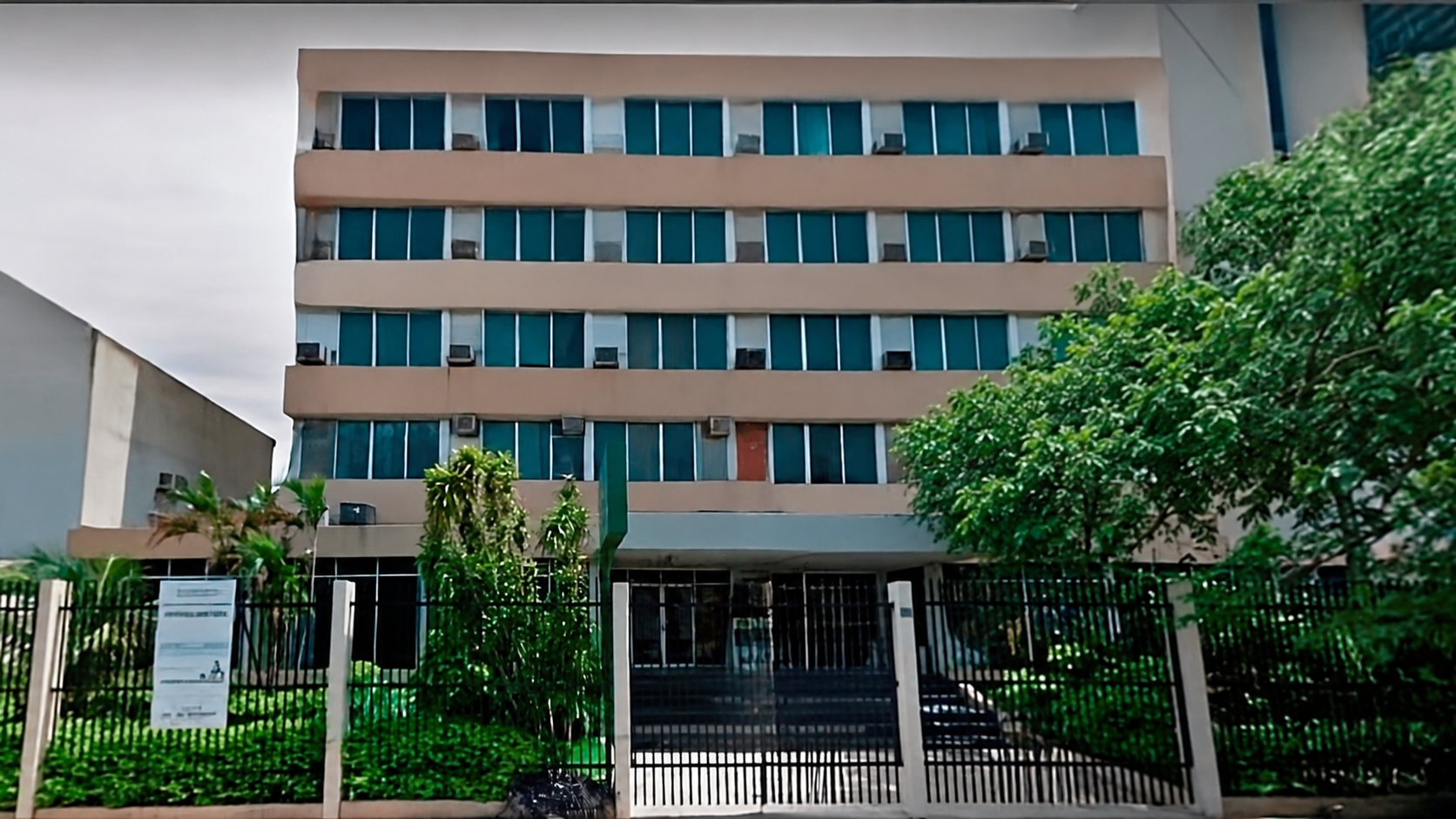
The next day I was back in Santa Cruz, and that evening I climbed the stairs of the natural history museum to the top floor. That's the fourth floor if you're from where I'm from, and the third if you're from here, where the ground floor doesn't count. My contact there, a museum scientist who has been the institutional anchor for this whole effort, was finishing a twelve-hour day. We talked from five until almost seven.
We covered the practical things first. I had brought her some lab thermometers she'd asked me to find, and told her they were a gift. I added, half joking, that I'm happy to help where I can but I'm not an NGO. She approved of my plan for spare memory cards and extra batteries. Then she told me about the museum's own camera traps. They started with twenty. They're down to about ten. Some failed. Some were simply lost. A few, years ago, walked off. It was a sobering lesson in how hard it is to keep anything in the field, and I took notes.
Then the conversation drifted, the way good ones do, to the park's golden age. There was a time when backpackers came to Noel Kempff, some of them on bicycles. Los Fierros, she said, was beautiful then, maybe the crown jewel of the whole park. Now it's largely in ruins. She said it plainly, without drama, the way you'd describe someone you'd loved who had fallen on hard times.
On the way out she introduced me to a young researcher in the lab, two years out of her studies, photographing specimens with a Nikon P1000. So that made two Nikon bird people in two days. She told me that one of the scientists who worked with Emmons is still at the museum.
And then she gave me the best news of the week. She introduced me, by message, to a field biologist who had worked in the field with Louise Emmons herself. She knows the park, she knows camera traps, and she'll be helping me plan until the twentieth, before she heads into the field on her own work. She walked that savanna during the study I've been reading about for a year.
I had been thinking of this project as picking up a thread that had been dropped. That's not quite right. Some of the people who held the thread are still here. They've just been waiting for someone to ask.
A cruceta for mi hija
Meanwhile, out in Florida, the logistics have been doing what logistics do.
Marcelo, the park ranger who anchors this whole effort, has been trying to get the old park vehicle ready. It's a Nissan Patrol from the nineties with a lot of honest miles on it. He talks about it the way some people talk about a daughter. Mi hija has a universal joint that clatters and a tire that won't hold air, so he's been reinflating it with a little compressor before every trip. Despacio, he says. She'll get there. Slowly, but she'll get there.
With fuel as scarce as it is this year, nothing out there is simple. Gasoline comes in from Santa Cruz on the long-distance bus, if you can find someone to buy it and the bus company will carry it, and freight is charged by the kilo. The new universal joint made the trip in a family visitor's luggage. I consulted William, my friend, guide, and mechanic, about tires. His advice came back fast: get the inexpensive Chinese ones, all four, and make sure the tread is cachuda, deep and lugged. The pretty highway tread, he said, is for asphalt. On wet dirt you'll just slide.
There is a Bolivian kind of competence in all of this that I've come to admire deeply. Nothing comes easily, and almost everything gets done anyway, through cousins, compadres, bus drivers, and a phone call to someone who knows someone. The park vehicle, Marcelo reminded me when he thanked me for the parts, doesn't just belong to this project. It goes back and forth for the park. Help one thing and you help the rest.
Fifteen working days
Bolivian paperwork has its own vocabulary, and this month I learned a new phrase: quince días hábiles, fifteen working days. That's the standard clock for a research authorization once everything is in.
So the weekend has been about getting everything in. It took a signed letter from the museum, which I picked up that evening on the top floor. It took a list of everyone entering the park, with their identity card numbers, which took two days of Marcelo driving around the community to find the guides at home rather than out in the forest. It took a short, honest list of roles still marked por designar, to be named later: the comunarios from Florida who will clear trail and help carry. The list goes in on Monday.
Fifteen working days is a long time when your flight home is fixed. It's not long at all when you consider that I'm asking a country to let me into one of its most precious places. I've decided to treat the waiting as part of the work. Somewhere in the patience is respect.
The one I missed
That afternoon in the café, my new birder friend told me about an eBird challenge running this October, an invitation for birders across Bolivia to get out and log what they see. It's exactly the kind of thing I'd love to do. In Santa Cruz alone, between the city parks and the edges of town, you could have a very good day.
I won't be doing it today, though. My wife is back home in DC, which means the honor of hosting my mother-in-law's birthday celebration in Santa Cruz falls to me. There are worse ways to miss a bird count.
As it turned out, the birthday had its own field notes.
What the family remembers
My wife's family comes from cattle country: the Beni, around Santa Ana de Yacuma, and for many years a ranch near Portachuelo, north of Santa Cruz. Her uncle is in town this week. He'll be with me in the field this month, and he grew up with the animals I've spent a year reading about. So, somewhere between the cake and the second round of coffee, I asked him about the borochi.
Yes, he said. He'd seen them over the years, two near Portachuelo and more out on the pampas. My mother-in-law nodded: you see them running in the pampa, she said, long-legged and fast, gone before you can call anyone over to look. They're nervous. They run from people. Es difícil encontrarlos, he said. They're hard to find.
Then the stories came, the way they do at a family table. They eat the tatú, the armadillo, which matches exactly what Emmons recorded in their diet. They'll come around a ranch house at night after kitchen scraps. And, he told me, they howl before the storms.
Not everything they told me matches the scientific literature. Ranchers in the Beni will tell you the borochi goes after newborn calves, even foals. He says he has seen it. Biologists generally describe the maned wolf as a hunter of small prey that is rarely a real threat to livestock. I wrote down both, side by side, because both matter. The animal's future in ranching country depends as much on what ranchers believe as on what is true. Everyone at the table agreed on one thing: a la gente no le hacen nada. They don't harm people.
He also reads tracks. He can follow a jaguar by its huellas and find where it has marked its territory by the smell, which is exactly the skill I'll need when we're deciding where on the savanna to put five small cameras.
And there was one more story. Out on the pampas near Santa Ana is a cattle estancia that belonged generations ago to his wife's grandmother. Today it's the Barba Azul Nature Reserve, a refuge for the blue-throated macaw, a critically endangered bird found nowhere on earth but the Beni savannas. Its tall grasses shelter more than three hundred and fifty bird species. Howler monkeys wake you in the morning. And, according to the reserve's own list of the animals that live there, maned wolves.
I came to Bolivia this month to look for the borochi in one far corner of one national park. Over a birthday cake in Santa Cruz, it turned out the animal had been running through my wife's family's history all along.
The birds will be there tomorrow. So, I hope, will the permit. And somewhere out on the Los Fierros savanna, if we're lucky, so will a tall red canid with a dark mane, walking a route his ancestors walked, past a small camera with a little metal tag that says it belongs to the park. If a storm is coming, maybe we'll even hear him first.
Next: the waiting, and then the park.


