


Under water
The plaza in San Ignacio de Velasco is quiet at dawn, the cathedral white against a low sky. Last night I went to sleep with a plan: Florida today, the comunarios, Marcelo, a cold beer at the campamento. This morning the road has its own plan.
Elmar comes in from the park to meet us over breakfast. Before the coffee arrives, word comes from Nelio, the guardaparque who rode up with William and me in February. The rains have come early, and the low stretches of the road to Florida are under water. A four-by-four with a driver who knows the road might get through. Our two-wheel drive, loaded to the roof with bidones, would not. And the paperwork for the park still hasn't caught up with us.
There's a version of this trip where I push on anyway, to prove something. Over the second coffee, Elmar and I talk it through, and the answer is plain: the borochi has waited this long, and it can wait a little longer. Nobody should get stuck in a flooded road for the sake of my calendar. We turn back toward Santa Cruz.
It's the right call. It doesn't feel like one. I came to Bolivia to put six cameras in the cerrado, and they're going back to the city in their cases.
What the road couldn't carry
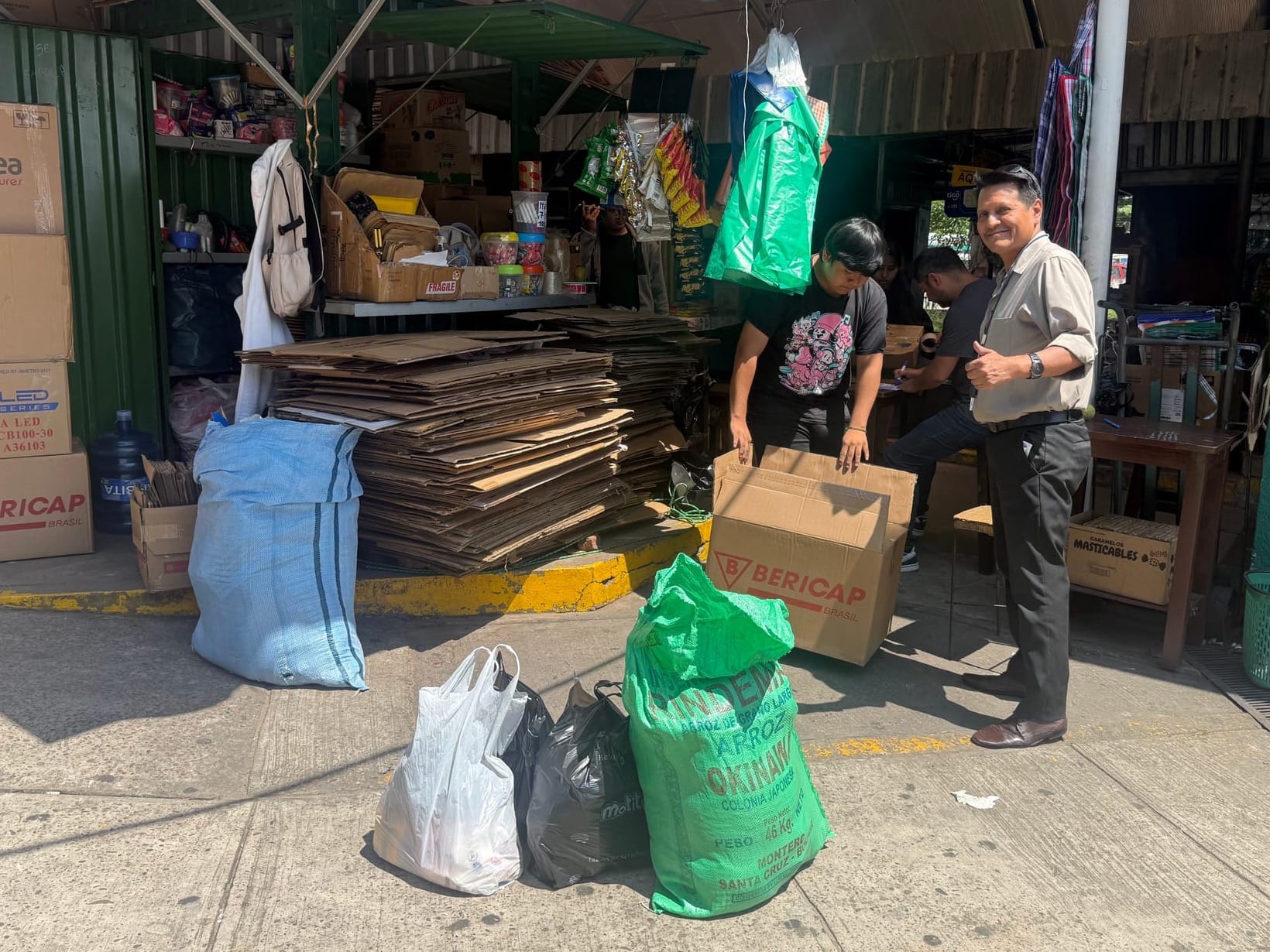
The hardest part of turning back isn't the cameras. In Florida, two guides and two macheteros had set aside their days to be ready for us. In a community where work comes when it comes, a day held open is a day of pay given up. So before I leave Bolivia, each of them gets paid for the day they waited, the same as if we'd walked into the cerrado together. Marcelo will hand it out.
The food we'd meant to carry to Florida couldn't wait for next season either. Back in Santa Cruz, a shopping list goes to the Mutualista market, and a box of groceries goes out on the overnight bus to San Ignacio. From there it travels on to Florida, with help from the president of the Bajo Paraguá's indigenous central.
It isn't the trip any of us planned. But I've learned over the years that how you leave a place matters as much as how you arrive, and I'd like to be welcome when I come back.
Lunch at Pacumutu
Tuesday, October 27 · Santa Cruz
If the park won't have us this year, the city still has work for us. Elmar is in Santa Cruz too, and so is Carola, and we meet for lunch at Pacumutu with a técnico from SERNAP. Over a full table, we talk about next year. This time the plan is simpler: one authorization for the whole year, two trips in, and the guardaparques looking after the cameras in between.
Elmar comes from Piso Firme, on the river at the park's edge, and Carola has known Noel Kempff since her first day as a ranger in 1997. She once saw a borochi up on the meseta, she tells us. Exactly where we'd hope to find one.
Forty days in the dry season
Wednesday, October 28 · Santa Cruz
At the Museo de Historia Natural Noel Kempff Mercado, Kathia and Luis spread out the history of the question. Between 1998 and 2007, the American biologist Louise Emmons, a vertebrae zoologist from the Smithsonian’s Museum of Natural History, studied the borochi on the park's meseta and in its cerrado. Between 2010 and 2014, Luis went back to her sites and walked them again. Those revisits are the backbone of where our cameras will go.
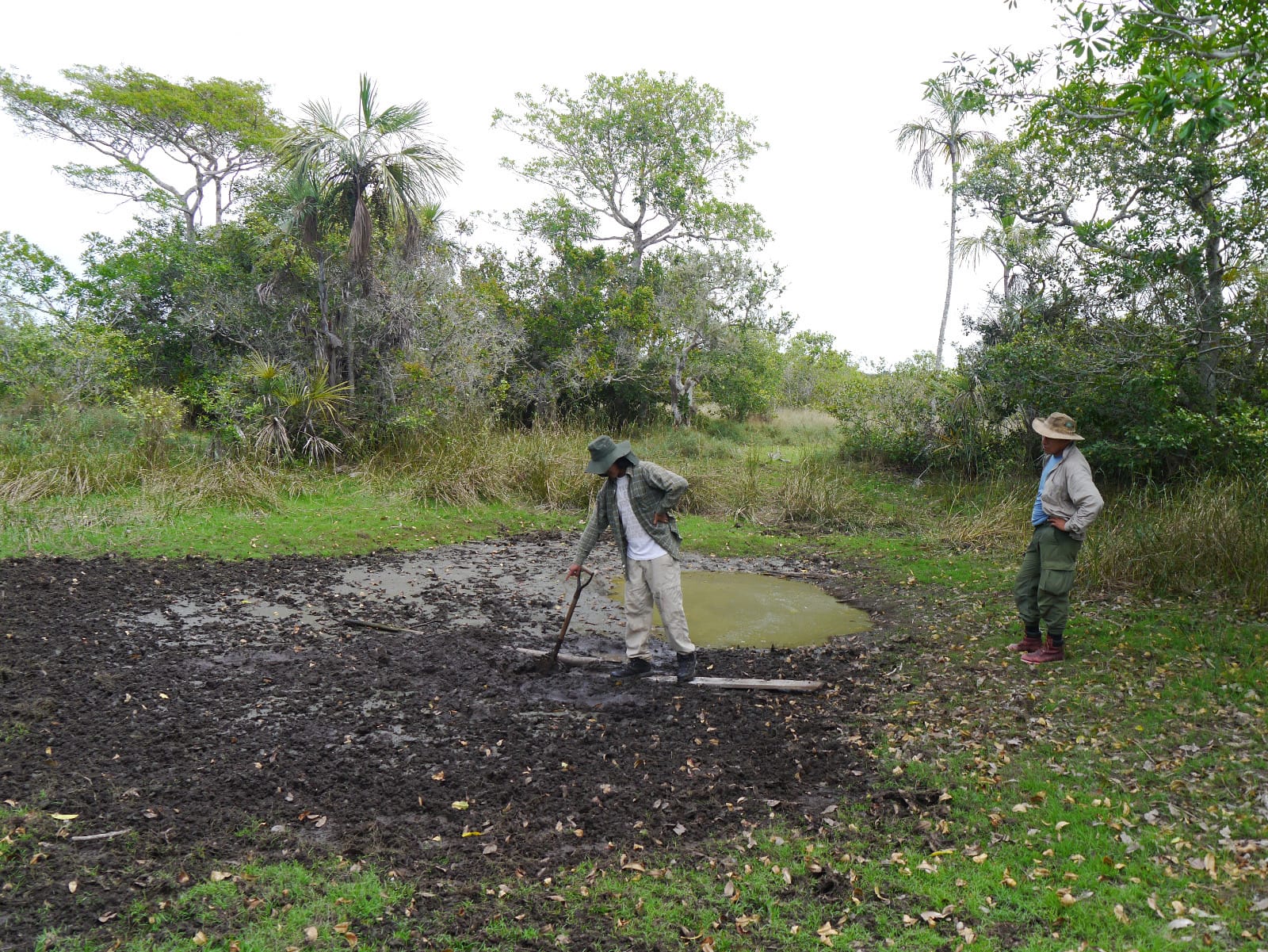
Emmons had camera traps out for only about forty days, in August and September. Ours, if all goes well, will watch for months. The water holes we're planning around are fed by springs, so they hold water deep into the dry season, when everything that lives in the cerrado has to come and drink. Kathia hopes we'll catch the cuis, the small wild guinea pigs the borochi hunts. Luis wants to come along when we go in. And I've promised the museo a workshop on the cameras before then.
Afterward, Kathia walks me to the plaza, where I'm to meet Elmar and Mayko. Along the way we talk about photography and conservation, the hard parts and the rewards. I'm first to arrive at the Irish pub, a mainstay overlooking the plaza from its open-air veranda on the second floor. As it turns out, I'm also the last. Elmar has been called into an emergency meeting, and Mayko misunderstood the invitation. So I order a chicken milanesa and two Coronas and entertain myself with the comings and goings on the plaza below. Then I catch a cab home. I'm getting close to going home for real, and I have to say, it feels kind of good.
The name on the park
Thursday, October 29 · Santa Cruz
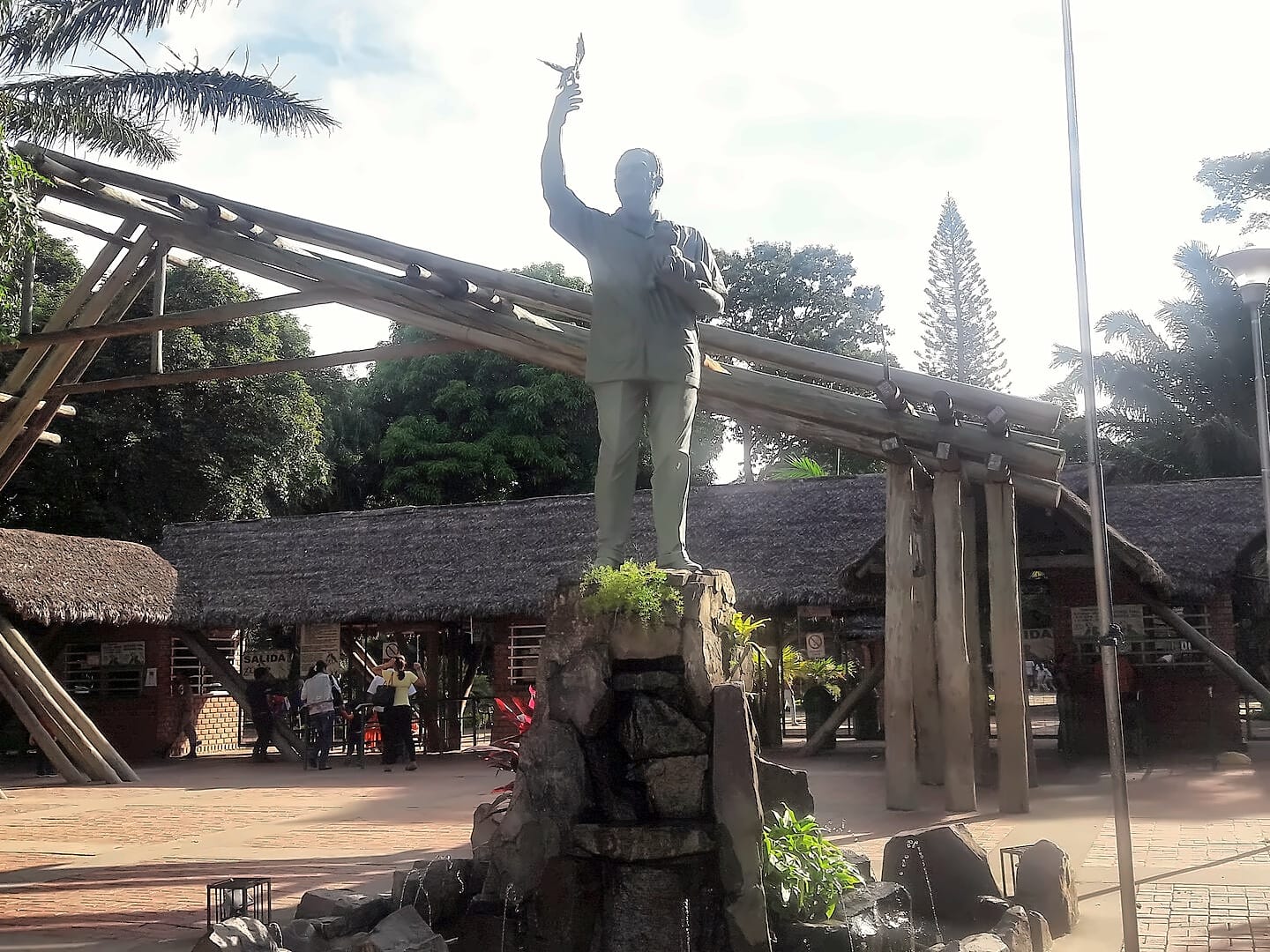
The park I keep writing about is named for a man. Noel Kempff Mercado was a Santa Cruz professor and naturalist, a passionate defender of Bolivia's wild places who spoke out against the illegal trade in wildlife. Amboró and Huanchaca, the two great national parks of Santa Cruz, owe much to him, as do the city's zoo, its botanical garden and its natural history museum.
In September 1986, on a scientific expedition to the Huanchaca plateau, he and two companions were killed after their small plane unknowingly landed on an airstrip serving a cocaine laboratory. Two years later, the park that covers the plateau and the forests around it, more than one and a half million hectares, was renamed for him. The museum where Kathia and Luis work carries his name too.
This afternoon I have coffee with his daughter, Lorena Kempff, at a café on Avenida San Martín. Lorena came to conservation by a long road. She studied public relations and public policy, worked in banking, and spent some years in La Paz. Her father's death, she has said, set off a long reckoning with what she wanted her life to be. In 2003 the family founded the Fundación Noel Kempff Mercado to carry his work forward, and she has led it ever since, throwing herself into the fight against the illegal wildlife trade her father had denounced. "My family history," she told an interviewer, "ties me to the conservation and defense of natural resources."
She's generous with her time, and direct. We talk for most of an hour about the park, about Florida, and about what it would take to do right by both. I don't ask her for anything. As we get up to leave, she tells me she's happy to help however she can.
I walk out into a cool, gray afternoon thinking that the borochi, without once showing itself, keeps introducing me to remarkable people.
Cycle one…
Friday, October 30 · Santa Cruz
So here is where things stand. This year we didn't enter the park. Next year we will, if the weather and the paperwork allow.
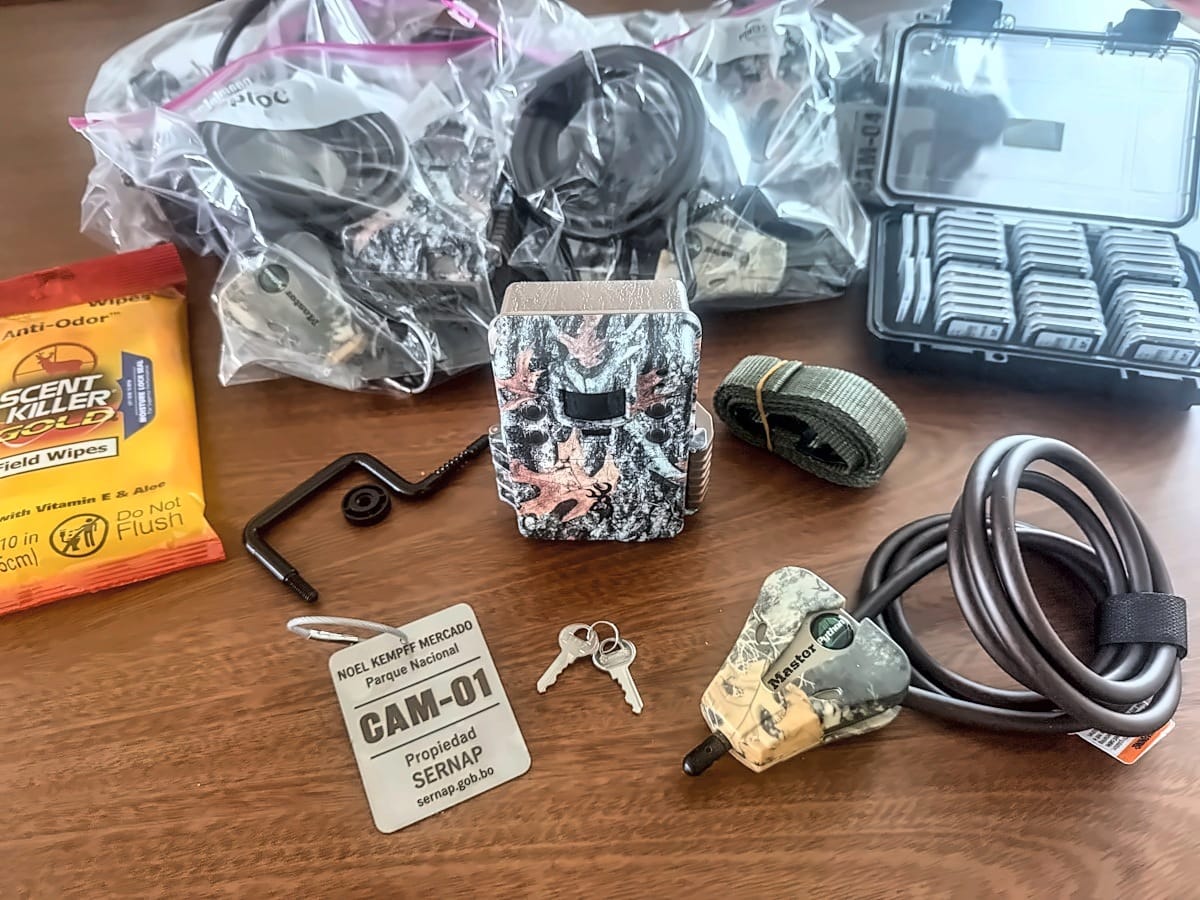
In late November, we’ll apply to SERNAP for a single authorization covering all of 2027. Around May, when the roads have dried, we go in with the museo, comunarios and the guardaparques and set the cameras. Partway through the dry season, the guardaparques swap cards and batteries on their patrols. In October we pull the cameras out. What they've seen goes back first to Florida and to the organizations that supported us, in person. Any findings will be announced by the museo and SERNAP, not by me. We're calling it cycle one, because if it works, it shouldn't be the last.
The cameras are stored safely in Santa Cruz. Mayko stays on as the project's man on the ground, keeping the threads warm while I'm gone. Marcelo heads to Santa Cruz on Monday for a well-earned rest with his family.
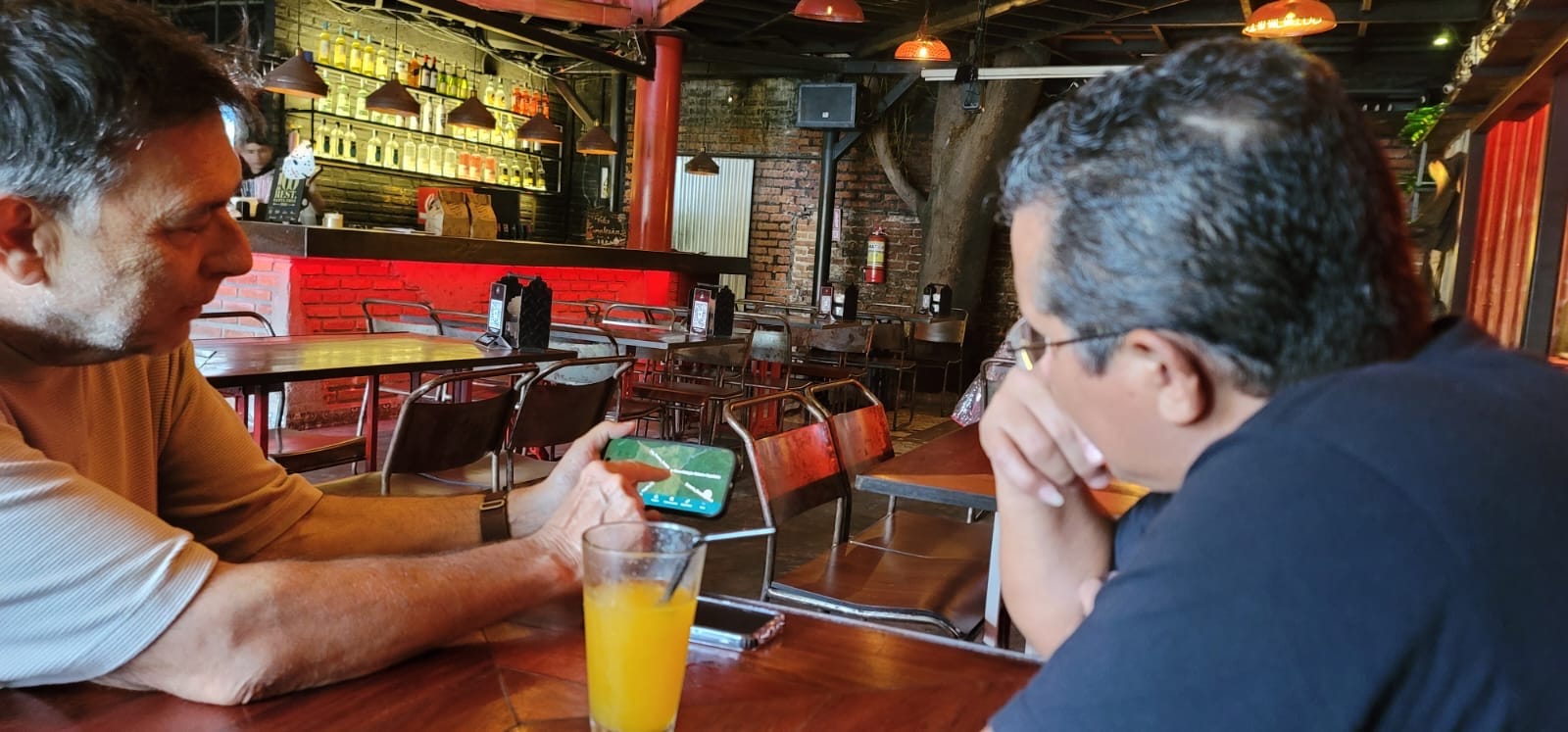
On my last afternoon, Elmar, Mayko and I have lunch together, and it turns into one of the best meals of the trip, with more laughter than planning. More than twenty years ago I first read about a park called Noel Kempff Mercado. Today I'm sharing a table with its director.
My flight leaves early tomorrow, before sunrise. I came to set six cameras and set none. Instead I paid four men for a day of waiting, sent a box of groceries up a flooded road, and sat at tables with the people who will make next year possible. The borochi can wait. It has been waiting a long time.


